
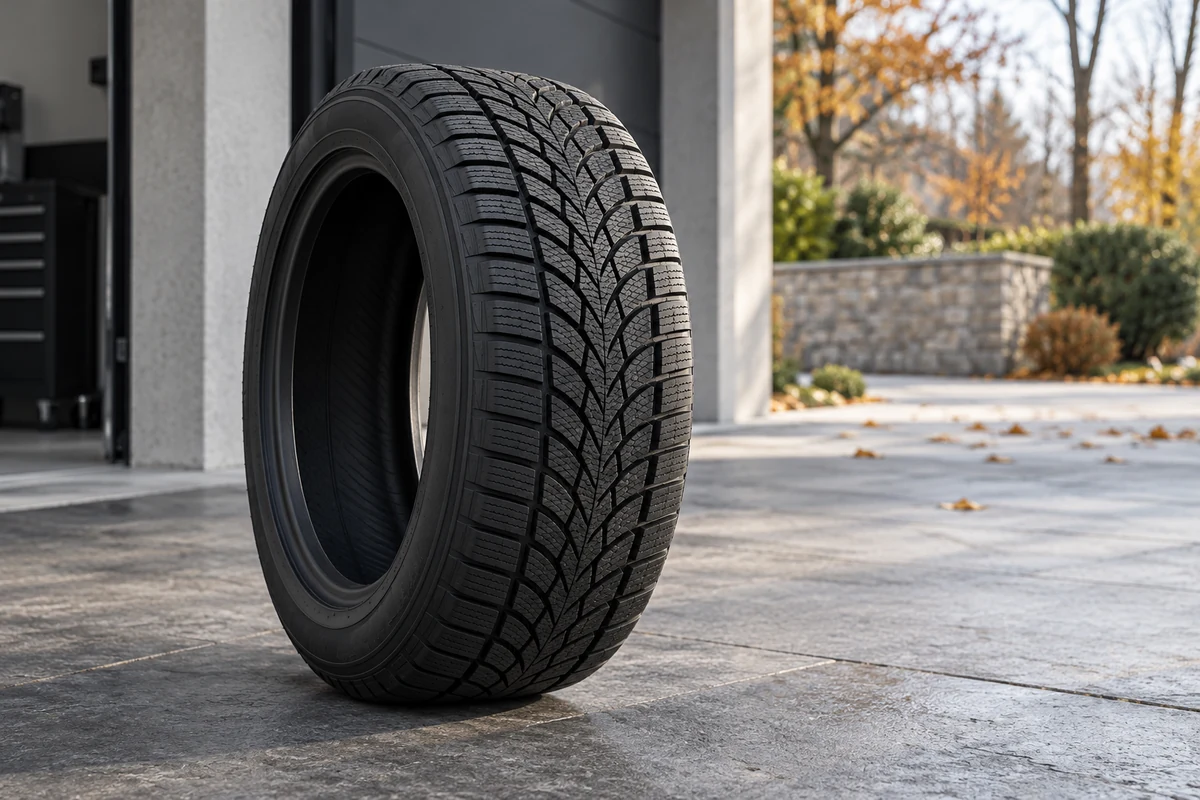
All-season or winter tyres: what does Mercedes-Benz recommend?
For the E-Class, the June 2026 Mercedes-Benz manual recommends winter or all-season tyres carrying the snowflake symbol and M+S marking on all wheels at temperatures below 7 °C. The manufacturer identifies winter tyres as offering the best possible grip in wintry road conditions.
The area of use also matters. The May 2026 V-Class manual explicitly identifies region and application as reasons to favour a particular tyre type.
Whether all-season tyres are allowed under Germany’s winter tyre rules is explained in our guide to winter tyres in Germany.
How can you identify all-season tyres? Alpine symbol and M+S markings
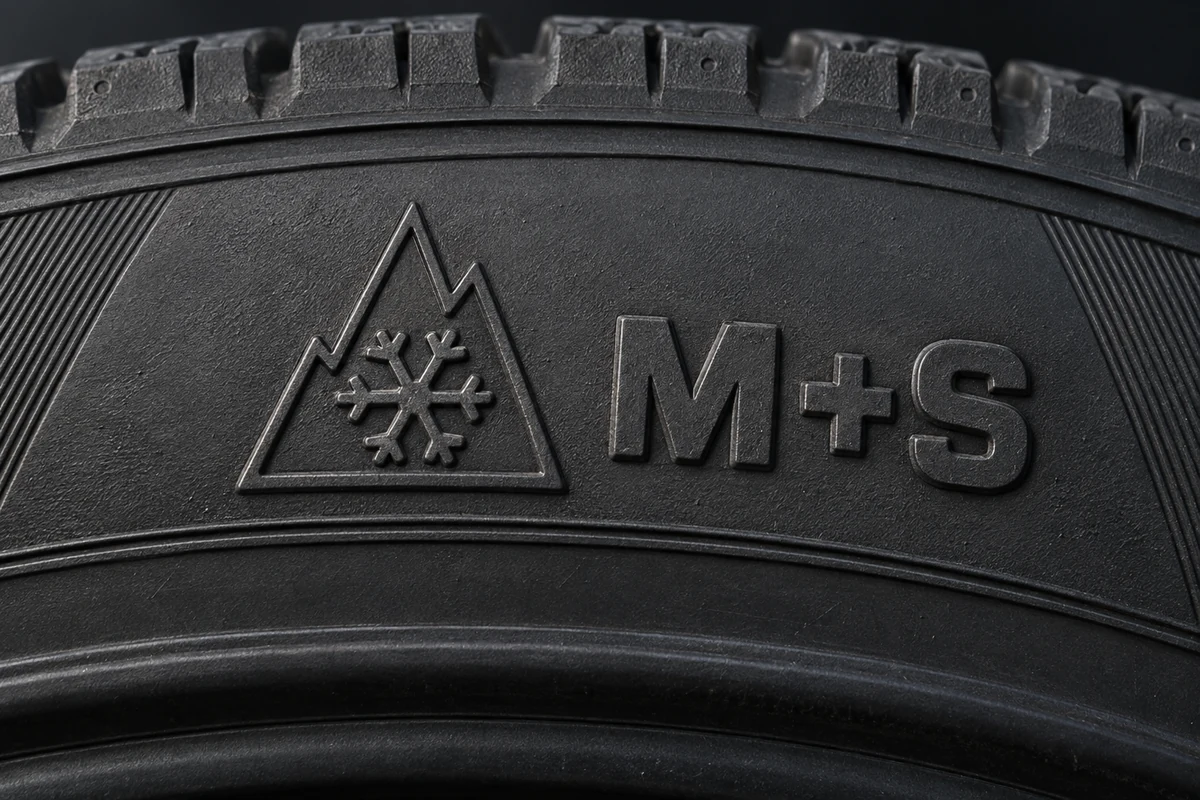
A snowflake alone does not identify an all-season tyre: winter tyres carry it too. The E-Class manual refers to both winter and all-season tyres with the snowflake symbol and M+S marking. The snowflake pictogram, a mountain with a snowflake also known as the Alpine symbol, and the letters M+S are separate markings; the illustration shows both.
Tyre size, load index and speed rating explained
In the example 205/55 R16 91V, 205 is the tyre width in millimetres, 55 is the sidewall height as a percentage of that width, R denotes radial construction and 16 is the rim diameter in inches. Load index 91 corresponds to 615 kg per tyre; speed rating V means up to 240 km/h. This explains the marking and does not constitute approval for a particular vehicle.
Tyre selection also depends on the approved load capacity and suitable speed rating, as well as size. Mercedes-Benz warns that exceeding these ratings can damage tyres and cause them to burst.
All-season tyre tread depth: what does 4 mm mean?
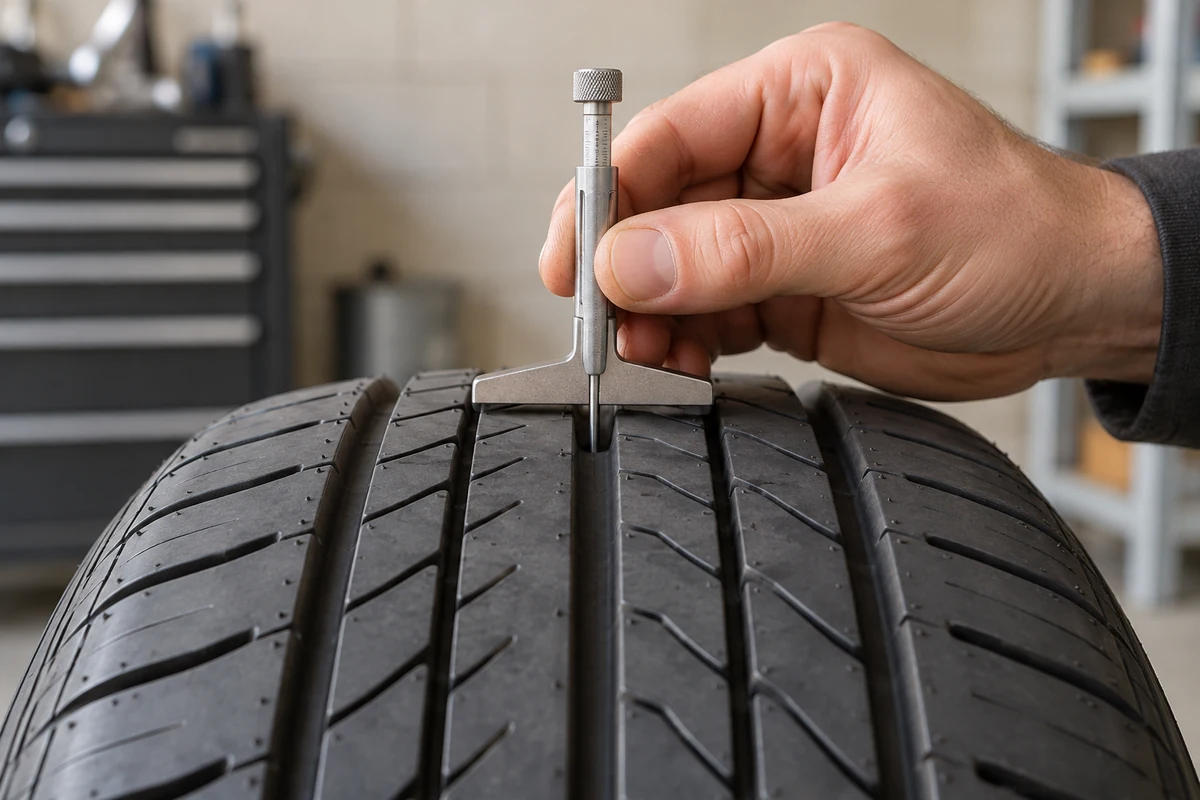
For safety, the E-Class manual recommends at least 3 mm for summer tyres and 4 mm for M+S tyres. These are explicitly manufacturer recommendations independent of the legal requirements of the country concerned. Here, 4 mm is therefore a safety guideline for winter use, rather than a statement about a universal statutory minimum tread depth.
As tread depth decreases, grip deteriorates particularly on wet or snow-covered roads. The manual therefore calls for regular checks across the full tread width of every tyre, including a visual inspection for damage.
Tyre age and DOT date code: when should all-season tyres be replaced?
The four-digit date code at the end of the DOT/TIN marking gives the manufacturing week and year: the first two digits indicate the calendar week, and the final two the year. For example, 2326 means week 23 of 2026.
One concrete manufacturer benchmark: the June 2026 E-Class manual specifies replacing tyres after no more than six years, regardless of wear. For the vehicle described there, remaining tread depth is therefore not the only factor.
What tyre pressure is correct for all-season tyres?
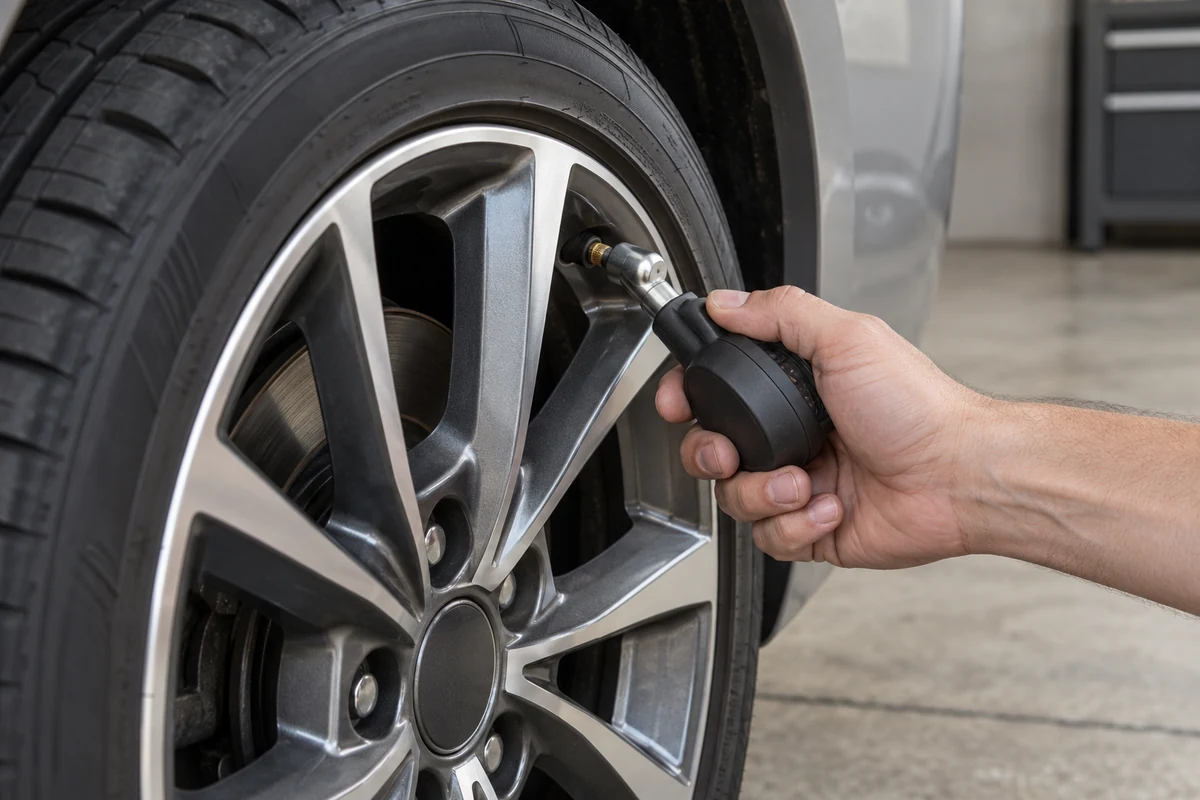
The correct pressure depends on the vehicle, tyre size and load. On the E-Class, the recommended cold-tyre pressures are shown inside the fuel filler flap. The table distinguishes between partial and full load; passenger and luggage indications show the relevant loading condition.
The manual defines cold tyres as those on a vehicle parked for at least three hours without sunlight on the tyres, or driven for less than 1.6 km. Tyre temperature and pressure rise during driving.
For the E-Class, Mercedes-Benz recommends checking pressures monthly, when the load changes and before longer journeys. Under-inflation or over-inflation shortens tyre life and can impair handling.
Mixing all-season tyres, rotation direction and running in
The May 2026 V-Class manual specifies tyres of the same construction, type and make; tyres on the same axle must also match in size and tread design. Summer, winter and all-season tyres are listed as different types.
On directional tyres, an arrow on the sidewall shows the intended rotation direction. The E-Class manual also specifies running new tyres in at moderate speed for the first 100 km.
Fuel consumption and aquaplaning: what affects tyre performance?
Under-inflated tyres increase rolling resistance and fuel consumption. The Roadcraft 2025 driving handbook identifies wet grip, fuel efficiency and noise performance as tyre-label comparison criteria.
Even a new tyre can aquaplane if its tread grooves cannot disperse water quickly enough. Roadcraft describes worn tread as an additional risk factor.