When would Germany’s driving licence reform start?
Most of the statutory part of the reform is due to enter into force on 1 July 2027, provided the Bundesrat consents first. The Bundestag passed the act amending the Driving Instructors Act and other road traffic laws on 5 November 2026, as amended by the Transport Committee. This followed a first reading on 24 September and a public hearing in the committee on 5 October.
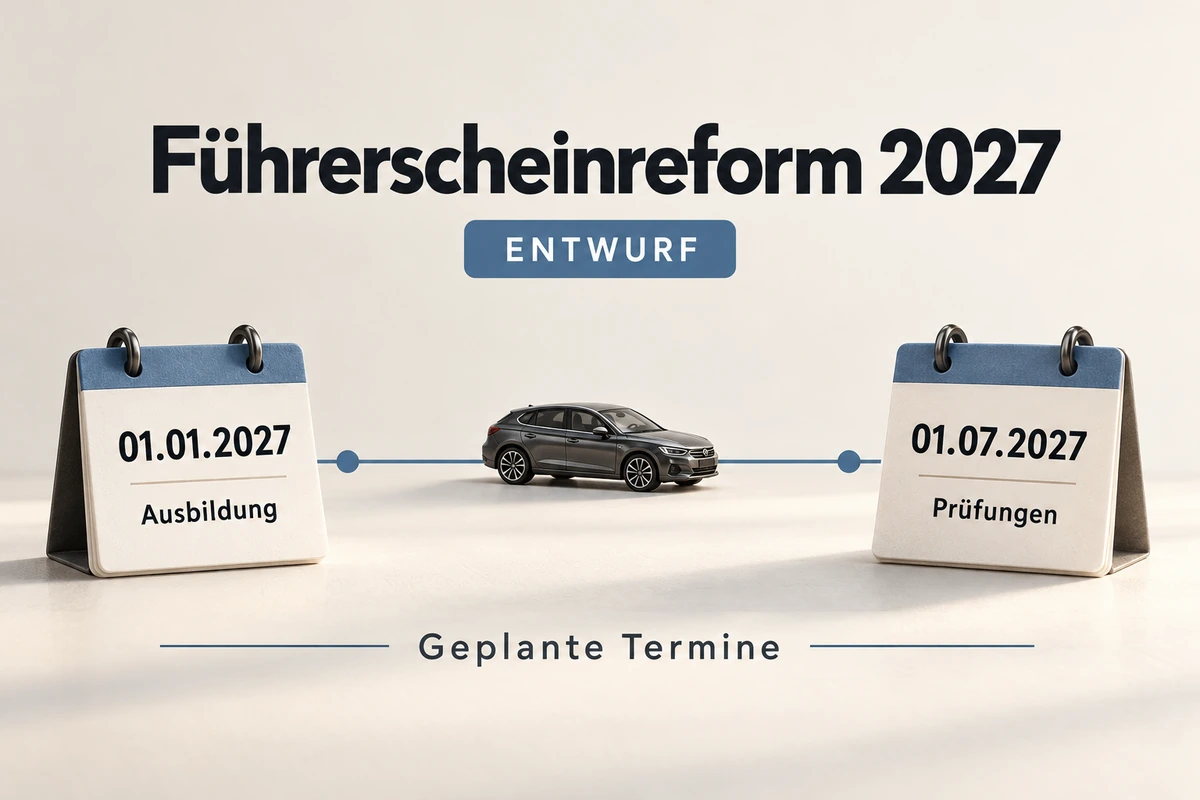
The details of training and tests are laid down in a regulation that also needs Bundesrat consent. Its draft sets out a phased timetable: new training rules from 1 January 2027, with changes to theory and practical tests from 1 July 2027. These are proposed dates. Existing rules apply until changes enter into force.
Driving licence costs in Germany: what could become cheaper?
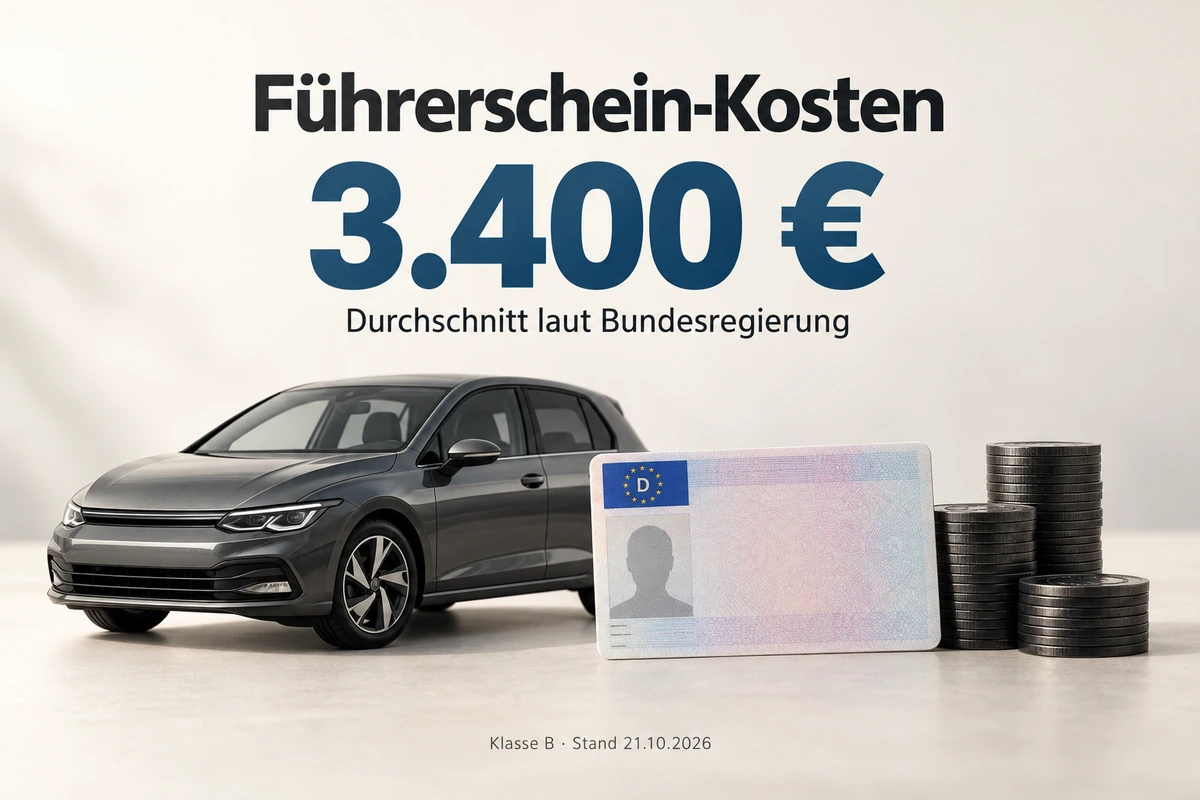
The official starting figure is an average of around €3,400 for a category B licence. The reform targets digital learning, special lessons tailored to each learner’s needs, shorter tests and reduced administration. The draft does not set a fixed new total price for a driving licence.
The learner’s bill still depends particularly on the driving school’s prices, the number of lessons actually needed and any repeat tests.
How many compulsory driving lessons does category B require?
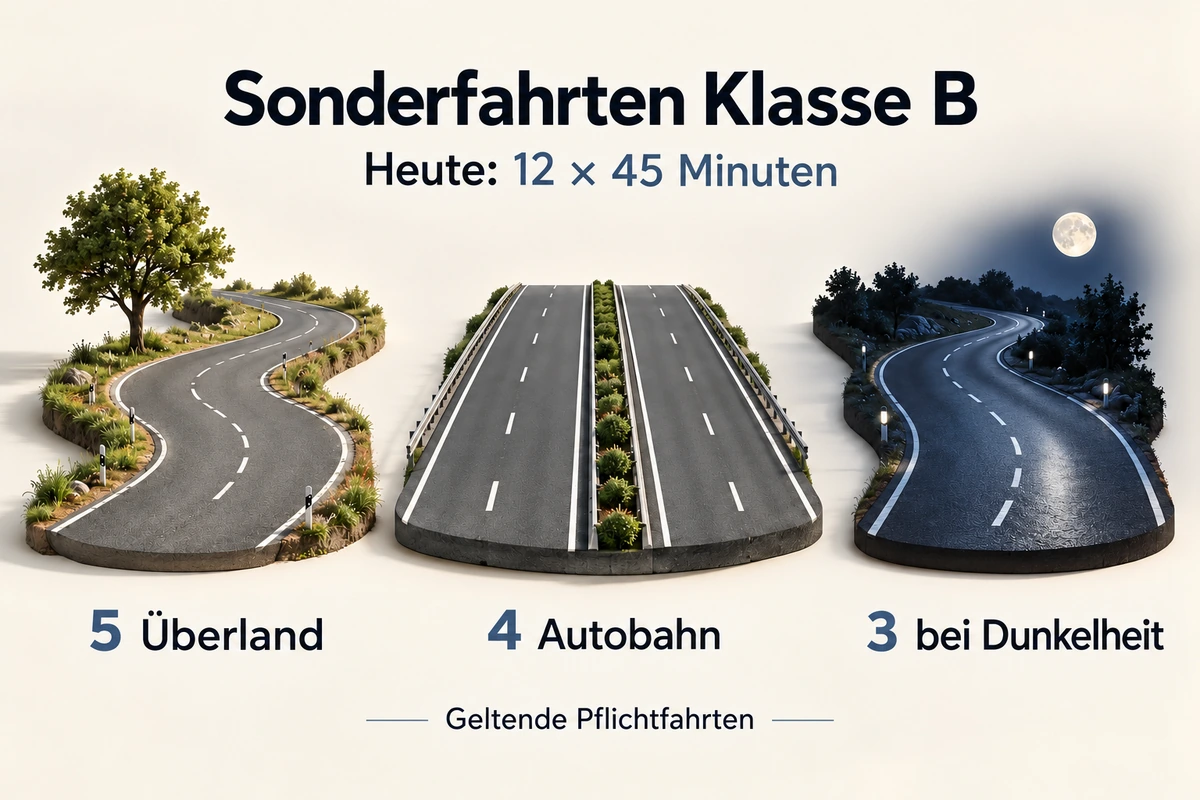
For a first category B licence, current rules require twelve special driving lessons of 45 minutes each: five on rural roads, four on motorways and three at dusk or after dark. Together, these amount to nine clock hours. Basic practical training is additional, with its length determined by the learner’s progress.
The proposal removes the fixed total of twelve. Rural, motorway and dusk or night driving remain part of training. The instructor would determine the necessary amount according to the learner’s abilities. These types of driving would therefore remain compulsory.
Online driving licence theory: could an app replace classroom lessons?
The draft allows learners to acquire their theory knowledge entirely digitally, including self-paced learning through an app. Classroom teaching, digital courses and combinations remain possible; a driving school would not have to offer every format.
Current law generally requires physical attendance; the act passed by the Bundestag would remove this requirement. Digital instruction is possible in justified exceptional circumstances with approval from the competent authority. The proposed online theory concerns learning: practical training and driving licence tests remain necessary.

Theory test: how many questions and penalty points are proposed?
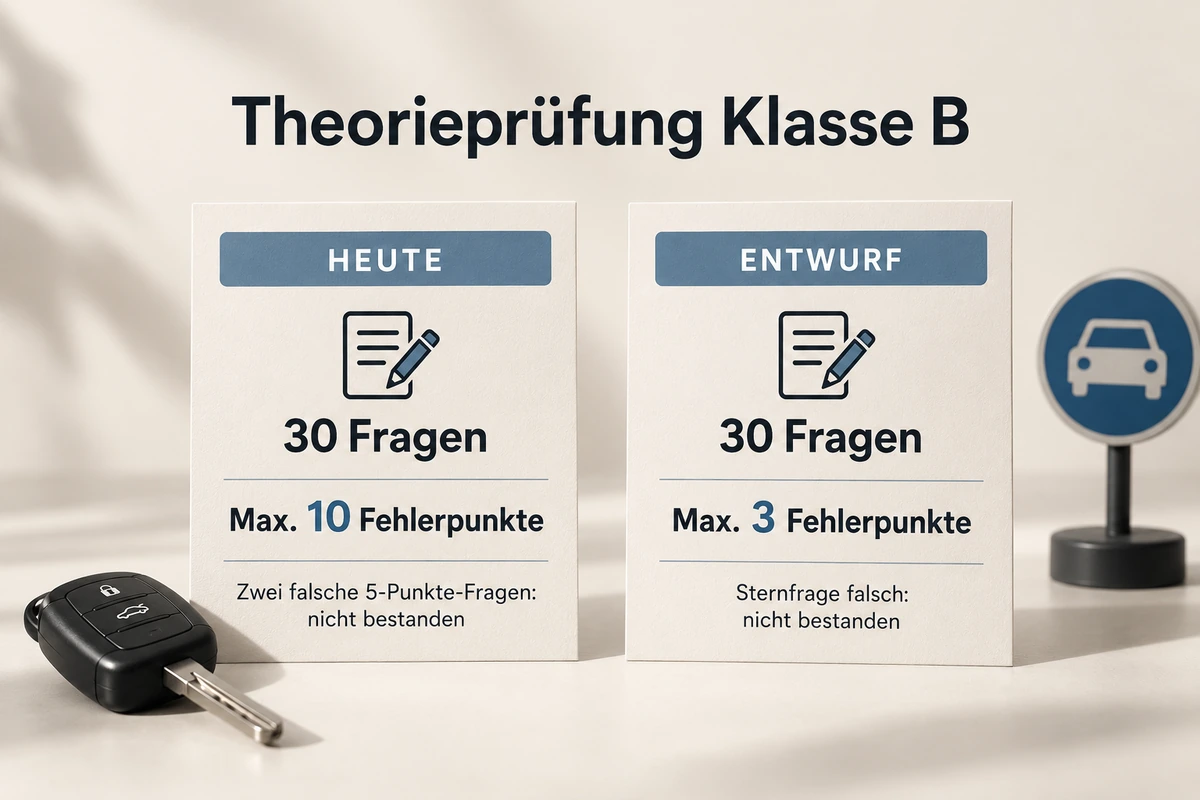
For a category B learner with no existing driving licence, the current theory test has 30 questions. Up to ten penalty points are permitted, but answering two five-point questions incorrectly still results in a fail.
The draft retains 30 test questions but gives every question a value of one point. Up to three penalty points would be allowed. An incorrect answer to a question marked with an asterisk would result in a fail regardless of the total.
Separately, the Transport Ministry plans to reduce the learning question bank by around one third. The complete question bank and the 30 questions in an individual theory test are different measures.
How long is the practical driving test?
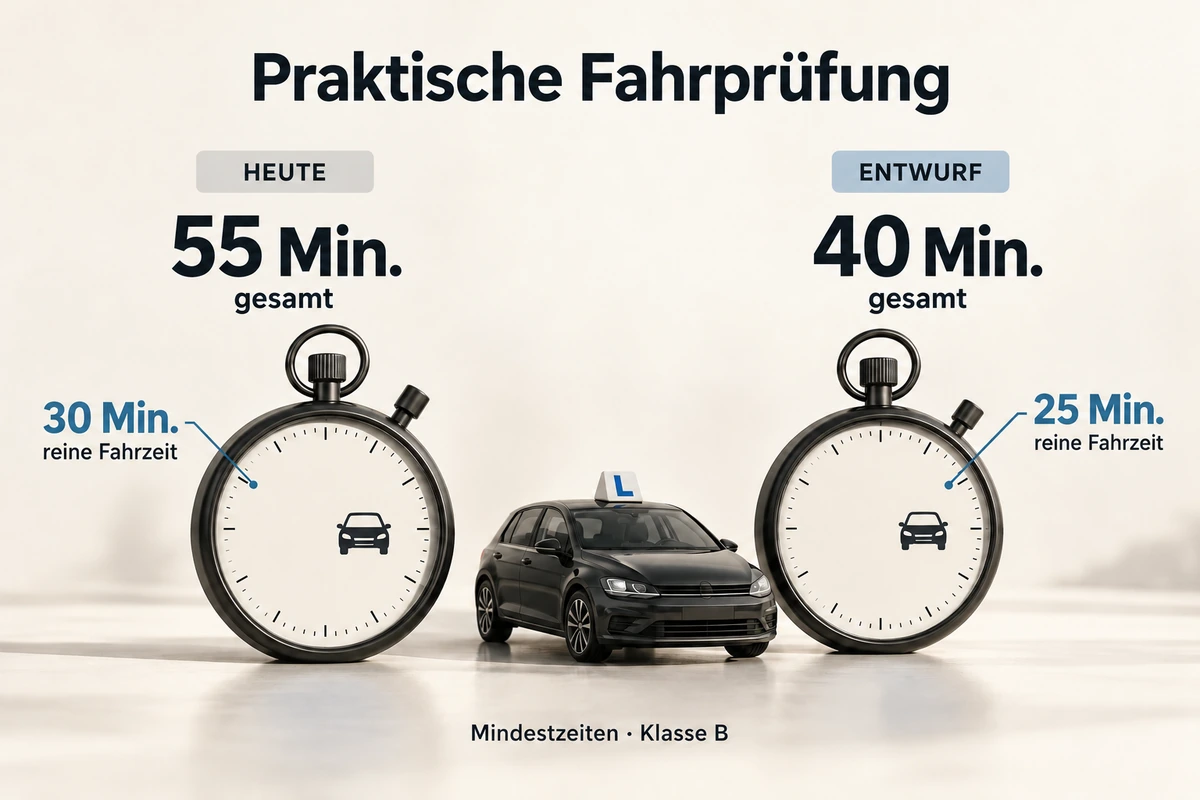
Category B currently requires a minimum total test duration of 55 minutes, including at least 30 minutes of road driving. The draft provides for at least 40 minutes overall, including 25 minutes of road driving.
That road-driving time excludes basic manoeuvres such as parking, the safety check and preparation and debriefing. The frequently mentioned 25 minutes therefore does not describe the whole test appointment.
Practising with parents before the driving test: what is proposed?
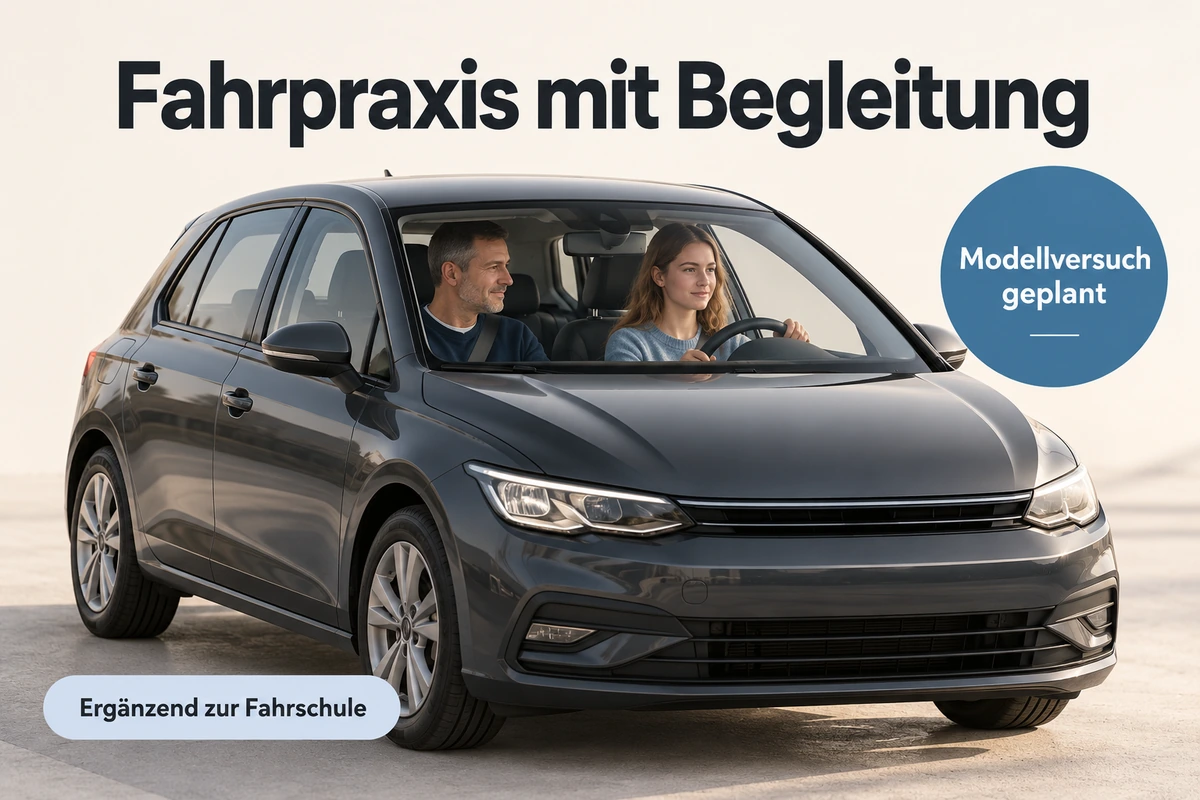
A pilot scheme would allow additional practice on public roads with a person close to the learner. It would supplement professional driving school training and start as a pilot. Under the act passed by the Bundestag, the Federal Ministry of Transport can enable the scheme nationwide by regulation, and each federal state can opt out through its own regulation.
The act requires, among other things, a passed theory test, at least six practical training units at a driving school beforehand, a joint briefing, official authorisation and appropriate third-party liability insurance. Under the draft regulation, the named supervisor must have held category B continuously for at least seven years and have no more than one point in the driving fitness register when applying. They must not have been subject to a driving ban in the preceding three years or be subject to one at the time.
After 500 to 600 practice kilometres, an observed drive with an instructor and the supervisor is proposed. At least six further practical training units at the driving school would follow. Visible learner-practice signs at the front and rear of the car are also required by the draft. Passing the theory test alone would not satisfy these conditions.
Could a driving simulator replace real driving lessons?
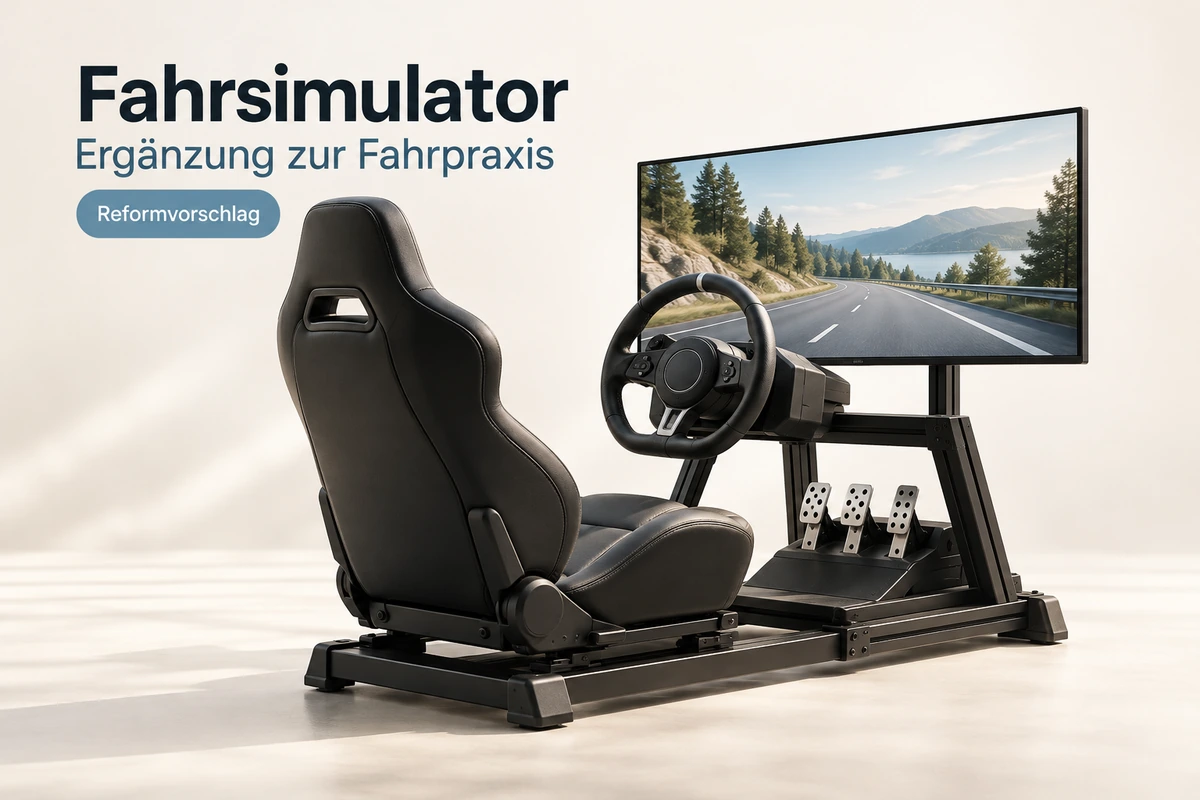
The draft allows suitable simulations as part of practical training. Rural, motorway and dusk or night driving must not take place exclusively on a simulator. The required real training units before and after the supervised practice phase, as well as the observed drive, are also excluded from replacement by simulation.
How would driving school prices and pass rates become easier to compare?
The reform proposes publishing driving school prices and test pass rates online in Mobilithek, Germany’s central platform for mobility data. This would make comparisons between schools easier. The transparency service forms part of the reform plan.